

 Wall Spray is a combination of science and art. The science is finding the exact ratio of water pressure, amount of material, air pressure and material. Weather temperatures and humidity also contribute to application of wall spray. Wall spray is also an art where you need to learn the best technique to properly and quickly fill the wall cavity. Sound difficult? Not really. The trick is to practice and be willing to adjust.
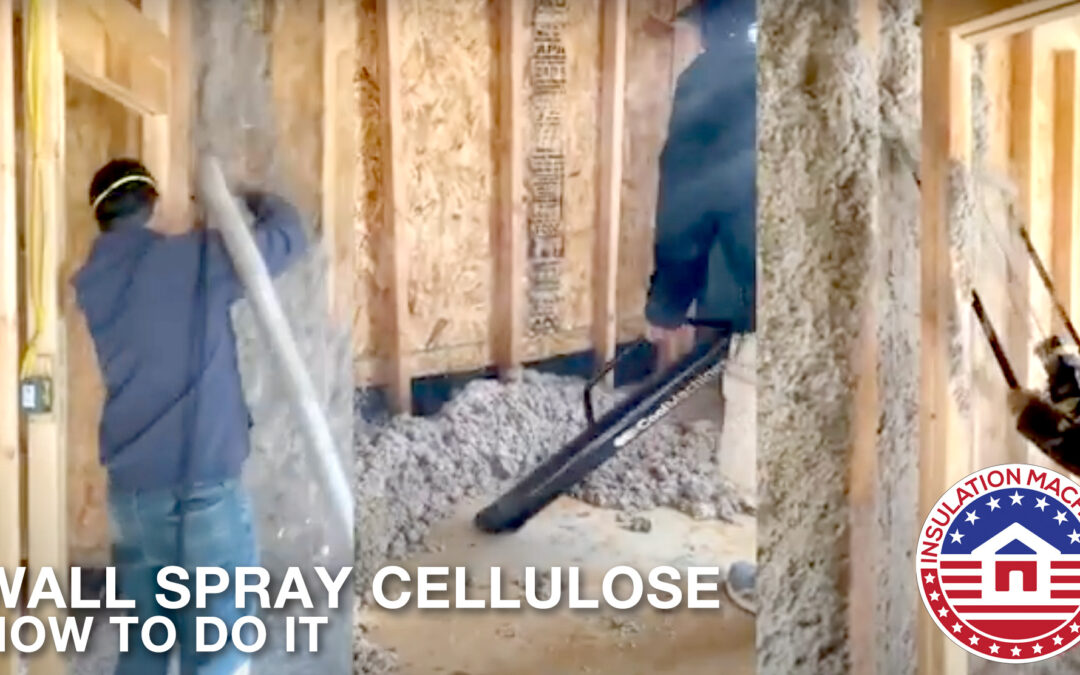
This article will attempt to help you be mindful of the initial settings and conditions to make the science and art of wall spray combine to make you an effective installer. The pictures demonstrate our CM2400 being used for wall spray. [1. All of the Cool Machine blowers are capable of wall spray.]
While this article will not answer every question about wall spray, it is a guide to starting. Cool Machines offers training on an annual basis at the factory. We (Insulation Machines Net) offers on-site training.
Job Preparation
Since you will be recycling material back into the hopper, you MUST make sure that the floors are thoroughly clean. A nail can damage the airlock seals and reduce the needed PSI to perform Wall Spray. Besides, any garbage thrown into the machine will show up on the wall. Your customer will not be satisfied to see dust, building debris and junk mixed in the wall system.
Use can foam and/or caulk to fill all the small gaps. Also, use tape (duct or masking) to cover the electrical outlets on walls to be sprayed.
Machine Settings
The goal is to add only as much water as necessary to cause the material to stick into the wall cavity. Oversaturating the material to slump out of the wall. Using too little water will cause it to not stick. It will fall out of the wall.
- Water Pressure: Adjust water pump pressure. Newspaper-based cellulose can be sprayed with less water. Cardboard-based cellulose needs more water, so lower water pressure and larger tips are used.
- If cellulose is newspaper-based (gray in color), use #250067 tips and set your water pressure to 400 PSI
- If cellulose has a lot of cardboard content (tan in color), then consider using #25015 tips and set your water pressure to 300 PSI
- Material Feed: Open the slide-gate to 6.” You may be able to increase the airlock if you are not making good speed.
- Blower Speed: Turn one blower on full speed. You may need to add more blower speed, depending on the length of hose you use. If the material bounces back out of the wall, turn the air speed down.
When the above settings are made, a bag of cellulose into hopper. Spray the cellulose with the water into a corner of the room to create a recycle slump. Put half a bag of dry cellulose into the hopper and return the slump back to the hopper (using a large shovel and trash barrel). It may take a few wall cavities to obtain the right ratio of water, material feed and blower speed.
Holding and Using the Spray Nozzle
 Developing a consistent spray technique is not difficult. The goal is to fill a standard 2×4-8’ wall cavity in 30 seconds. Do not feel you need to rush as you will leave gaps of material. At first, you will have quite a bit of overspray. Since it can be recycled, overspray is easier and better to manage than fixing gaps later.
The Cool Machine spray nozzle has a teardrop shape. The teardrop is held upside down with the spray tips angling upwards. The upward spray pattern will lead the material and provide a moist surface as you spray up the wall.
Starting at the bottom of the cavity, aim the spray nozzle into one of the lower corners of the cavity and spray into the opposite corner. Then direct the spray nozzle into the cavity, parallel to the floor. You should be able to stand about 18” from the wall.
In a fluid, slow, steady motion, sweep the nozzle back and forth to fill the cavity. The more consistent spray rhythm you develop, the better the material will fill the cavity and the overspray will become less. When you reach the top of the wall cavity, spray into the corners, moving slightly closer. This will help you minimize gaping at the top of the wall cavity.
Recycling Material
If recycling with a manual technique, the hopper loader will mix the material into the machine in a ratio of about 1 part dry to 1 part recycle. When adding the damp material, stir it with your hand to help blend the material. Do not read deep into the machine.
If recycling with a vacuum hood or vacpack, set the recycle side and dry side airlocks to 4″. You can increase/decrease the openings to accomodate an evenly saturated spray.
Your goal is to create a consistent blend of damp-to-dry. As the job progresses, you may need to increase water pressure or lower the material feed.
Scrubbing Material
 When a number of runs have been filled, scrub the material off the wall. Holding the scrubber with a slight angle, run it up each cavity, overlapping the studs.
Finishing the Job
When you have finished spraying the job, inspect each run to make sure that any gaps or pockets are refilled. Use a small straw broom to clean off the top plates, corners, window and door frames.
Instructions for Your Contractor
Because you are adding water to cellulose, the wall spray must be allowed to dry. The fiber moisture needs to be 25% or less before the wall is covered. Do not cover walls with plastic. Opening windows and placing fans in the room will help dissipate the water vapor.
Wall spray can be done in the winter, even with temperatures in the teens. We recommend that a furnace be turned on the night before spraying.
Summary
The Cool Machine brand of spray equipment is designed to minimize the amount of water used to spray. Our experience, while training, finds that we typically spray with just 28% of water content or less. The techniques and unique manufacturing of the spray nozzles helps prevent over saturation of water. Walls are typically able to be boarded up the same day, if not by the next morning.


