

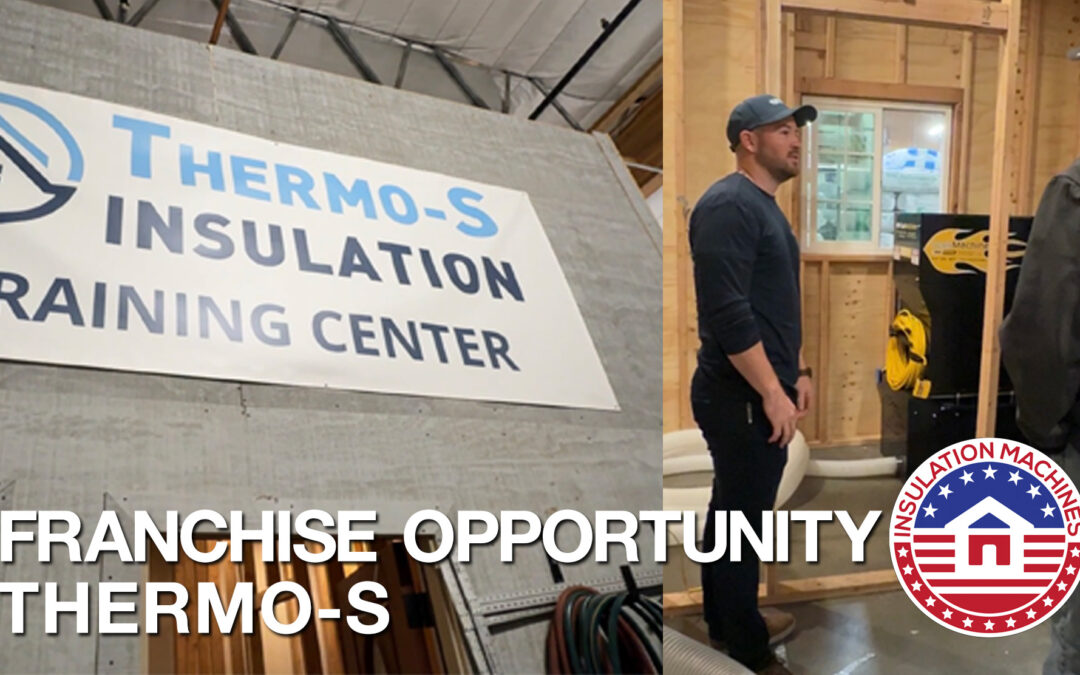
When insulation contractors look to grow their business, the opportunity often isn’t just in doing more of the same work—it’s in expanding services that solve bigger problems for homeowners. That’s exactly where Thermo-S (formerly known as Thermo-Shield) fits into the conversation.
In a recent field discussion in Mesa, Arizona, insulation contractor Nick Smith shared how insulation services, and home performance strategies has helped transform his company into a more complete solution provider. His experience offers a practical look at how Thermo-S can play a role in a modern insulation business.
From Insulation Contractor to Full Home Performance Company
Nick started in the insulation industry in 2013 and launched his company in 2015. Like many contractors in hot climates such as Arizona, he initially focused on solutions that help homeowners combat extreme heat.
Thermo-S is often installs a paintable thermal barrier or radiant barrier coating, designed to improve energy efficiency and reduce heat transfer. For contractors working in high-temperature regions, this type of solution can be a strong entry point into the market—especially for retrofit jobs where homeowners are looking for immediate improvements in comfort.
But what’s notable is how that starting point evolved.
Instead of staying limited to coatings alone, Nick expanded into:
- Blown-in fiberglass and cellulose insulation
- Spray foam applications
- Energy audits and diagnostic testing
- Air sealing and duct system improvements
This transition is critical. It reflects a shift from being “just an insulation contractor” to becoming a home performance specialist—someone who evaluates and solves the entire building envelope problem.
Why Thermo-S Fits Into a Bigger System
One of the biggest takeaways from this discussion is that no single solution fixes every home.
Thermo-S works to reduce radiant heat and improving thermal performance, but they are most powerful when combined with:
- Proper attic insulation levels
- Air sealing to eliminate leakage
- Duct system corrections
- Blower door testing to measure performance
As Nick explains, every home is different. A one-size-fits-all approach—such as simply adding insulation without addressing airflow or duct issues—often leaves performance gaps.
By incorporating these broader service offerings, contractors can:
- Provide layered solutions instead of single fixes
- Increase job size and revenue per project
- Deliver measurable results to homeowners
- Build stronger long-term customer relationships
Equipment Matters: Reliability and Serviceability in the Field
Another critical component of scaling a home performance business is equipment selection.
Nick emphasized the importance of working with equipment that is:
- Reliable in daily operation
- Simple to understand and repair
- Supported by a responsive service network
This is especially important when running insulation blowers like the CM1500 and CM2400. Downtime on a jobsite directly impacts profitability. If a machine goes down and cannot be repaired quickly, the entire project stalls.
That’s why serviceability becomes just as important as performance.
Contractors need equipment that allows them to:
- Replace airlock seals
- Service blowers and electrical components
- Troubleshoot issues in the field with basic tools
This aligns directly with how successful insulation businesses operate—minimizing downtime and maximizing production.
The Role of Training, Support, and Systems
Nick highlighted that one of the biggest challenges for contractors—especially those starting or expanding—is not just the work itself, but:
- Marketing effectively
- Converting leads into jobs
- Understanding pricing and sales processes
- Building partnerships in their local market
This is where structured systems and ongoing support become valuable.
Whether a contractor is operating independently or through a franchise-style model, having access to:
- Proven marketing strategies
- Sales training
- Equipment guidance
- Industry partnerships
…can dramatically shorten the learning curve and reduce costly mistakes.
Thermo-S as a Growth Strategy for Insulation Contractors
For contractors considering the Thermo-S model, the opportunity is not just about offering another product—it’s about opening the door to a broader business model.
Thermo-S can serve as:
- An entry point into retrofit and energy efficiency work
- A differentiator in competitive markets
- A complementary solution alongside insulation and air sealing
When positioned correctly, it helps contractors move upstream—offering diagnostics, recommendations, and complete solutions rather than single-service installs.
Final Thoughts: Building a Complete Insulation and Energy Efficiency Business
The insulation industry continues to evolve. Homeowners are more informed, energy costs remain a concern, and expectations for comfort and performance are higher than ever.
Contractors who succeed in this environment are the ones who:
- Expand beyond basic insulation installs
- Understand building science principles
- Offer multiple solutions, including coatings like Thermo-S
- Invest in reliable equipment and strong support networks
Thermo-S combines the right equipment, training, and approach, it becomes part of a much larger opportunity.
And for contractors looking to grow, that’s where the real value is.


