

When insulation contractors focus on scaling their productivity, they immediately analyze metrics like jobs completed, square footage installed, or daily material output. However, the most critical variable keeping those crews moving is frequently overlooked: preventative equipment maintenance.
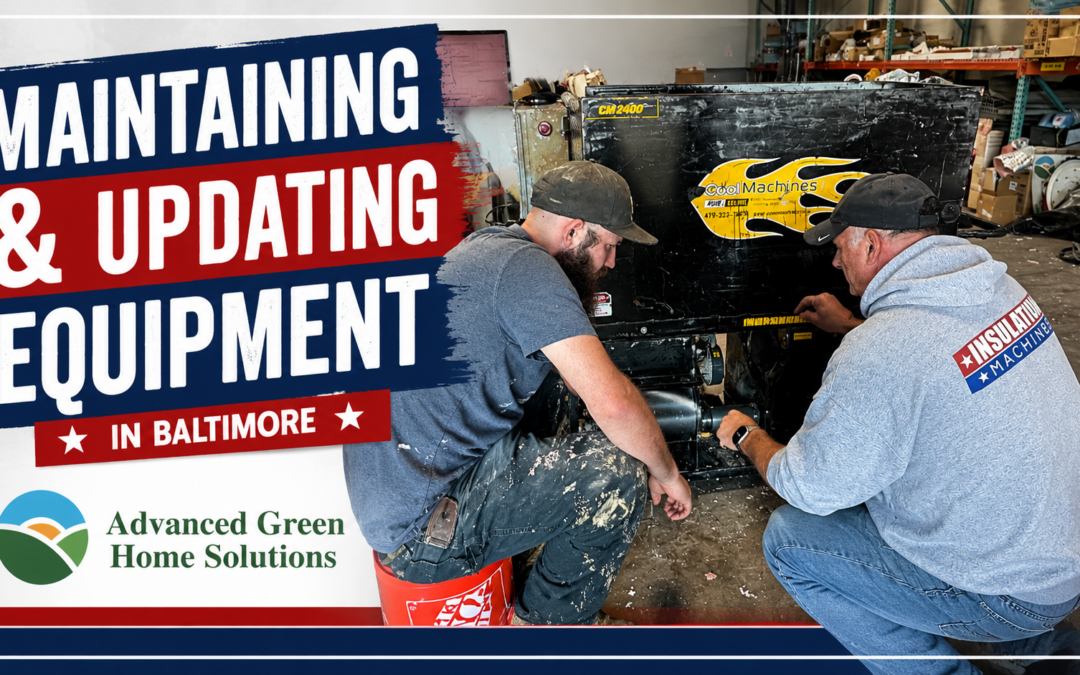
Recently, the team at Insulation Machines traveled to Baltimore, Maryland, to work alongside Advanced Green Home Solutions. The mission was to service two CM2400 insulation blowers by Cool Machines and one Krendl 575 insulation machine. While shipping delays out of our control extended our stay, the extra time turned into a major win—providing an ideal environment for advanced technical training, on-site troubleshooting, and high-value hands-on learning.
More importantly, the trip perfectly illustrated why growing insulation companies should invest in developing an in-house “equipment champion.”
The Realities of Field Wear and Tear
During our time in Baltimore, we tore down and serviced a fleet spanning multiple generations of machinery:
-
A 4-year-old Cool Machines CM2400
-
A 12-year-old Cool Machines CM2400
-
A 2-year-old Krendl 575
The mechanical overhauls were extensive. Our technicians replaced airlock seals, rheostats, blower motors, drive chains, and an agitator motor, while also modernizing both CM2400 units with upgraded wireless remote systems.
While replacing these parts restored factory-level production to the trucks, the true value of the week came down to workforce education.
[Mechanical Wear] ➔ [In-House Technician Training] ➔ [Zero Jobsite Downtime]
Advanced Green Home Solutions strategically assigned one of their core crew members, Jonathan Powell, to work directly alongside our master mechanics. Instead of just watching us turn wrenches, Jonathan actively completed the repairs, replaced the seals, and wired the electrical diagnostics himself.
This immersive training handed him the diagnostic skills needed to identify small issues before they trigger catastrophic field failures.
Diagnosing the Root Cause: Machine Failure vs. Power Supply
Having an educated maintenance person on your staff doesn’t just save you money on replacement parts; it saves you days of frustration when troubleshooting under pressure.
While on a live jobsite visit with the Advanced Green Home Solutions crew, a performance issue arose: a machine was bogging down and losing pressure. Instead of panicking or assuming the blower motor had failed, we executed a systemic power check.
The Diagnosis: The crew was running the insulation blower on a 6,500-watt generator. The specific machine configuration actually required a minimum of 8,500 watts to sustain peak performance.
The insulation machine itself was completely flawless. By instantly identifying the power supply deficit, we helped the crew split the electrical load between the onboard generator and the residential house power. The team kept running at full speed while waiting for a properly rated power unit to arrive.
Proof in the Fleet: 12 Years of Consistent Output
This trip put a massive spotlight on the longevity of well-engineered equipment. The 12-year-old CM2400 we serviced is still a daily workhorse for Advanced Green Home Solutions.
Whether you manage a single portable machine or a sprawling multi-state truck fleet, investing in structured insulation equipment training pays immediate dividends via reduced downtime, lower emergency repair bills, and maximum machine lifespans.
Insulation Equipment Maintenance FAQ
1. How does Insulation Machines help establish a crew maintenance plan?
We don’t just supply hardware; we build operational systems. Our team works directly with your fleet managers to develop custom daily, weekly, and monthly maintenance checklists tailored to your specific machine hours and material choices. We provide hands-on onboarding, high-wear component identification, and parts discounts to ensure your uptime is protected.
2. How often should insulation blowers be serviced?
Maintenance must be proactive rather than reactive. Follow this baseline timeline:
-
Daily: Visual hose inspections, belt tension checks, airlock blow-back monitoring, and debris cleaning.
-
Weekly: Component lubrication, drive chain adjustments, and electrical terminal inspections.
-
Monthly: Deep wear analysis on airlock seals, bearings, and air filters.
-
Quarterly/Seasonal: Total system performance evaluation and preventative consumable replacement.
3. Who is the best employee to appoint as an in-house maintenance tech?
Look for a lead installer or “equipment champion” who is mechanically inclined, detail-oriented, and physically operates the machinery in the field every day. This individual will notice subtle changes in sound, pressure, and vibration before a complete breakdown occurs.
4. What are the primary causes of insulation machine failure?
The majority of mechanical failures are entirely preventable. They stem from running machines with worn-out airlock seals (causing severe pressure loss), ignoring loose drive chains, using contaminated material, and operator overfeeding.
5. How much jobsite downtime can proper maintenance prevent?
Implementing a structured preventative maintenance schedule routinely eliminates 70% to 90% of unexpected field breakdowns. During the peak summer and winter seasons, avoiding just one single machine failure can easily cover the cost of your entire yearly maintenance budget.
6. Which components wear out the fastest on insulation equipment?
Airlock seals, drive chains, and blower filters are the primary consumables on any insulation machine. They are engineered to absorb the friction of processing abrasive fibers and must be monitored closely.
7. Do you provide technical training for new insulation crews?
Yes. We provide comprehensive training covering proper pneumatic machine settings, material conditioning best practices, daily maintenance routines, and quick-fix electrical diagnostics to make your crew entirely self-sufficient.
8. When should I repair a component versus completely replacing it?
Repair minor, isolated issues that do not impact your bags-per-hour output. Replace immediately if the wear causes reduced pressure, inconsistent fiber conditioning, or places undue mechanical strain on other internal motors and gears.
9. Can poor maintenance directly impact production speed and material coverage?
Absolutely. Worn seals and clogged filters cause immediate pressure drops. This forces your crew to spend more time inside the attic, leads to material clogs, and alters your coverage ratios—meaning you use more bags than estimated to achieve the target R-value.
10. What tools should be inside every insulation truck’s maintenance kit?
Every rig should be equipped with a high-quality grease gun, a complete socket set, spare drive chains and links, an extra airlock seal kit, and basic electrical testers.
11. How does preventative maintenance alter machine lifespan?
Consistent maintenance can easily double the operating life of a Cool Machines or Krendl system, protecting your capital investment and maintaining a much higher resale value on the secondary market.
12. Does Insulation Machines offer ongoing troubleshooting support?
Yes. We operate a dedicated, long-term technical support pipeline to help you diagnose performance issues, source OEM replacement parts, and scale your fleet confidently.
13. Where can I find visual step-by-step repair guides?
We maintain a massive library of technical teardowns, seal replacements, and troubleshooting walkthroughs. Subscribe to our official YouTube channel: @InsulationMachines.


