

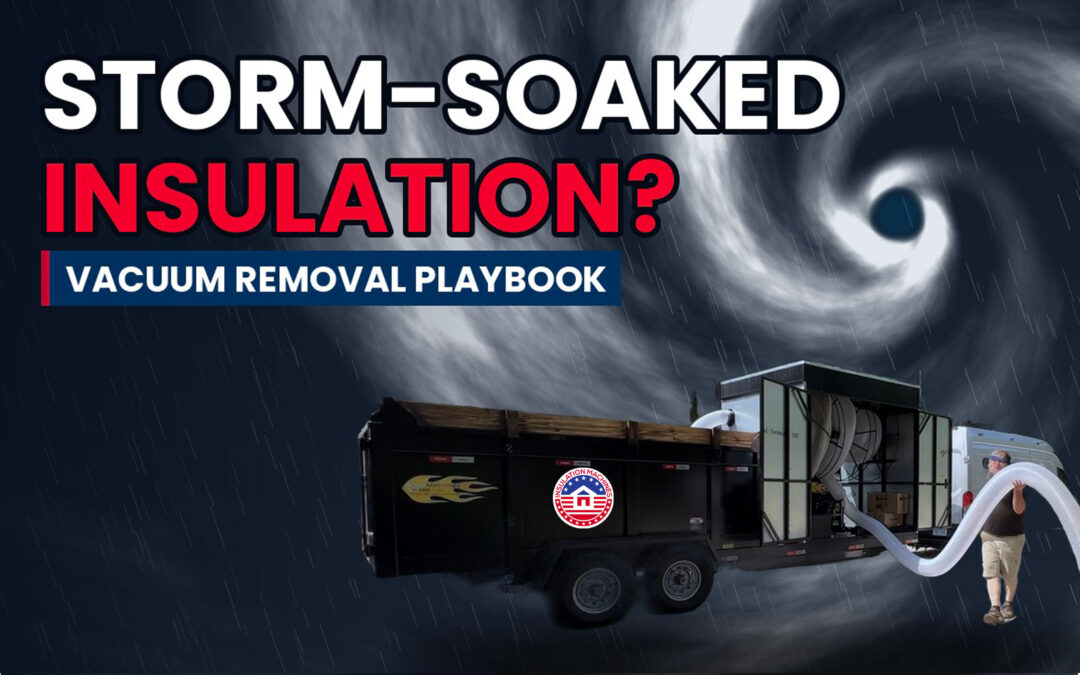
Why wet insulation has to come out fast
Insulation works by trapping still air. Once it’s wet, that air is replaced by water, and the material stops doing its job. Cellulose absorbs water like a sponge, compacts, and can get heavy enough to bow or bring down ceiling drywall. Fiberglass doesn’t absorb as much, but it lets water pass straight through to the ceiling below and holds dirt, debris, and moisture in the attic.
Time matters. Mold can start growing on wet building materials within 24 to 48 hours. Storm water coming through a damaged roof also carries shingle grit, debris, and whatever else was on the roof deck. In most storm jobs, the question isn’t whether the insulation comes out. It’s how quickly you can get it out and get the attic drying.
Before you start the vacuum: the safety walk
Storm-damaged attics are some of the most dangerous spaces your crew will enter. Walk the job before anyone drags a hose up the ladder.
Check the structure. Look for broken trusses, soft or missing decking, and daylight through the roof. If the roof isn’t dried in with a tarp or temporary repair, rain will keep undoing your work.
Kill power to wet areas. Wet insulation around light fixtures, junction boxes, and bath fans is an electrical hazard. So is standing water in a crawlspace with wiring running through it. Have the homeowner or an electrician shut off affected circuits before crews go in.
Watch the ceilings. Saturated drywall can give way under a knee or a foot. Crews should stay on joists and use walk boards. Warn the homeowner to keep people out of the rooms below.
Plan for the heat. Gulf Coast attics get dangerously hot, even in October. Schedule attic time for mornings, rotate crew members, and keep plenty of water available..
Know what you’re vacuuming. If you see vermiculite (a pebbly, gray-brown or gold material), stop. Vermiculite in older homes may contain asbestos and should be tested before anyone disturbs it. Rodent droppings or nesting also call for extra precautions.
Gear up. At minimum, crews need a properly fitted N95 respirator, eye protection, gloves, and disposable coveralls. If there’s visible mold, step up to a half-face respirator with P100 filters.
Storm-displaced animals in attics and crawlspaces
Rising water and wrecked habitat send animals looking for high, dry shelter, and attics and crawlspaces are exactly that. After a Gulf Coast storm, crews should expect company. It’s one of the most overlooked hazards on removal jobs, and one of the most serious.
Snakes. Floodwater pushes snakes into crawlspaces, wall cavities, and attic insulation, including venomous species like cottonmouths, copperheads, and rattlesnakes. Wet insulation and storm debris give them plenty of places to hide.
Fire ants. Fire ant colonies float on floodwater and settle on the first dry spot they find, including crawlspace framing and piled insulation. Disturbing one can mean dozens of stings in seconds.
Spiders and stinging insects. Black and Brown widows and brown recluses like undisturbed insulation, and wasps often build near attic vents and soffits.
Raccoons, opossums, rodents, and bats. Cornered animals bite and scratch, and some can carry rabies. Their droppings and nesting material are a biohazard, so step up respiratory protection and follow CDC guidance for rodent cleanup when you find them.
How to protect your crew. Light up the space and look before anyone enters or reaches in, and never reach blind into insulation or debris. Wear heavy gloves, boots, and long sleeves tucked into the gloves. In crawlspaces, check the entry and the first few feet with a flashlight and a long tool before anyone crawls in. The vacuum itself is a safety tool here: the hose lets crews pull material from arm’s length instead of digging through it by hand. If you find a snake, a large animal, or an active nest, back out and call a licensed wildlife removal company. Make sure every crew member knows the job address and the nearest emergency room, and call 911 for any venomous snakebite.
Setting up your insulation vacuum for wet material
Wet insulation is heavier and stickier than dry material, and that changes how you set up the machine.
Choose a vacuum with power to spare. Wet insulation is heavy, long hose runs are common, and after a storm the home’s power may be off. For this work, the Cool Machines CoolVac 35, CoolVac 40, and CoolVac 25 Diesel are the best machines for the job:
- CoolVac 40: the pick for the biggest attics, the longest hose runs, and the heaviest wet material.
- CoolVac 35: a strong all-around workhorse for crews running several storm jobs a day.
- CoolVac 25 Diesel: the diesel option for fleets that already run diesel trucks, so the crew keeps one fuel on the job.
Place the unit carefully. Keep the vacuum outside the house, and point engine exhaust away from doors, windows, crawlspace vents, and soffit vents so carbon monoxide doesn’t drift inside.
Keep the hose run short. Every extra foot of hose costs suction, and wet material makes that loss worse. Use the largest-diameter hose your vacuum is configured for and the shortest run that reaches the work area. For layouts and fittings, see our hose configuration guide. If you have to reach a long attic, our guide to daisy-chaining insulation vacuums shows how to extend reach without starving the machine.
Bring more bags than you think. Wet bags fill with a lot more weight in the same volume. Don’t overfill them. Heavy bags tear, and they’re hard on your crew’s backs. Stage full bags close to the truck or trailer so you’re not carrying them across the yard.
Get in and out of jobs faster with a VacTrailer™
After a storm, the number of jobs you finish in a day depends on how fast you set up and tear down. Unloading a vacuum, dragging out hoses, and loading everything back up eats time on every single job. A VacTrailer™ is built to cut that time.
The vacuum rides mounted and ready to run, hoses stay on reels, and every piece of gear has its place. Crews pull up, unreel, start the machine, and get to work. When the job is done, they reel in and head to the next address. That efficient setup can mean fitting another job into the day when the phone won’t stop ringing.
VacTrailers come in three configurations:
- VacTrailerCombo™: an enclosed trailer with vacuum housing, hose reels, an insulation machine, and a rear dump for removed material. One trailer handles removal, haul-off, and reinstall.
- VacTrailerDuo™: an open trailer with dual hose reels, carrying both an insulation machine and a vacuum.
- VacTrailerSolo™: an open trailer with a vacuum or blower and rear hose reels, the lean setup for crews focused on one service.
A trailer setup also keeps your truck bed free and your equipment secured between jobs. See the VacTrailer configurations.
Working the attic or crawlspace
Start at the far end of the attic and work back toward the hatch, so crews never have to crawl over cleared areas dragging a hose. Damp, loose material usually vacuums well. Fully saturated cellulose is different: it forms heavy clumps that can plug the hose. Break those clumps up or hand-bag them instead of forcing them into the intake.
In flooded crawlspaces, wet batts often sag or fall from between the floor joists. Vacuum them where you can and hand-bag heavy, waterlogged pieces. Keep the machine and cords well clear of any standing water.
Don’t stop at the stain line. Water wicks sideways through insulation, so the wet zone is almost always larger than the stain on the ceiling below. Remove the visibly wet material plus a margin into the dry-looking area, and confirm with a moisture meter before you call it done.
If the hose plugs, shut down, clear it, and shorten the run or reduce how much material you’re feeding at once. Pushing through a partial clog just packs it tighter.
Document everything
On storm jobs, your paperwork can matter as much as your vacuum. Homeowners filing insurance claims need proof of what was damaged and what was done. Build these habits into every job:
Take before, during, and after photos of the attic, the ceilings, and the roof damage. Record moisture readings and where you took them. Note the square footage cleared and the number of bags removed. Keep disposal receipts. Hand the homeowner a clean summary they can pass to their adjuster. You’re not giving insurance advice, just making sure the facts are easy to find.
After removal: dry, inspect, then reinsulate
Clearing the insulation is only the first half of the job. Before new insulation goes in, the roof needs to be permanently repaired and the attic needs to dry out. Fans and dehumidifiers speed that up. Check the framing and roof deck with a moisture meter, and don’t reinsulate until the wood reads at normal moisture levels. Blowing new insulation over damp wood traps moisture and restarts the problem.
If there’s mold, know where your scope ends. In Florida, mold remediation above a certain size requires a state license, so partner with a licensed remediator when the job calls for it.
Once the attic is dry and clean, you’re in position to finish the job yourself by blowing in new insulation. That turns a removal job into a full removal-and-reinstall ticket. See our insulation blowing machines to match a machine to the size of your crew.
Is storm removal work worth adding?
After a major storm, demand for attic cleanouts spikes almost overnight, and contractors who already own a vacuum and know the process get the calls first. The same equipment also covers rodent cleanouts, retrofit tear-outs, and pre-renovation removals the rest of the year, so it doesn’t sit idle between storms.
If you’re thinking about adding insulation removal to your services, want help choosing between the CoolVac 35, CoolVac 40, and CoolVac 25 Diesel, or want to see how a VacTrailer™ fits your operation, call Barry at (810) 614-0072 or email barry@insulationmachines.net.
Can wet attic insulation be dried out and left in place? How quickly should storm-soaked insulation be removed? Can an insulation vacuum remove wet insulation? What’s the best insulation vacuum for storm removal work? What protective gear do crews need for wet insulation removal? What dangerous animals can be found in attics and crawlspaces after a storm? How far past the wet spot should insulation be removed? When can new insulation be blown back in?Frequently asked questions about wet attic insulation removal
Sometimes, but rarely after a storm. Lightly damp fiberglass from a small, clean leak can occasionally dry if the source is fixed fast. Cellulose that’s soaked, compacted, or stained, and any insulation touched by dirty storm water, should come out. It loses insulating value, holds moisture against the framing, and can support mold growth.
As soon as the roof is dried in and the attic is safe to enter. Mold can start growing on wet building materials within 24 to 48 hours, so every day that wet insulation sits increases the chance of a bigger remediation job.
Yes. Damp insulation vacuums well with the right setup: a short hose run, the largest hose diameter the machine is configured for, and bags that aren’t overfilled. Fully saturated clumps of cellulose are heavy and can plug the hose, so break them up or hand-bag them.
For wet, heavy storm debris, the Cool Machines CoolVac 35, CoolVac 40, and CoolVac 25 Diesel are the best machines for the job. The CoolVac 40 suits the biggest jobs and longest hose runs, the CoolVac 35 is a strong all-around workhorse, and the CoolVac 25 Diesel fits fleets that already run on diesel.
At minimum, a properly fitted N95 respirator, eye protection, gloves, and disposable coveralls. If there’s visible mold, step up to a half-face respirator with P100 filters. Crews also need a plan for attic heat, including water, breaks, and rotating who’s in the attic.
Flooding drives animals toward high, dry shelter. Crews commonly run into snakes, including venomous species, plus fire ants, black widow and brown recluse spiders, wasps, raccoons, opossums, rodents, and bats. Light and inspect the space before entering, never reach blind into insulation, and call a licensed wildlife removal company if you find a snake or large animal.
Remove the visibly wet material plus a margin into the dry-looking area, and confirm with a moisture meter. Water wicks sideways through insulation, so the damp zone is usually larger than the stain on the ceiling.
After the roof is repaired, any mold is properly addressed, and the framing and roof deck have dried to normal moisture levels on a meter. Reinsulating over damp wood traps moisture and restarts the problem.


