

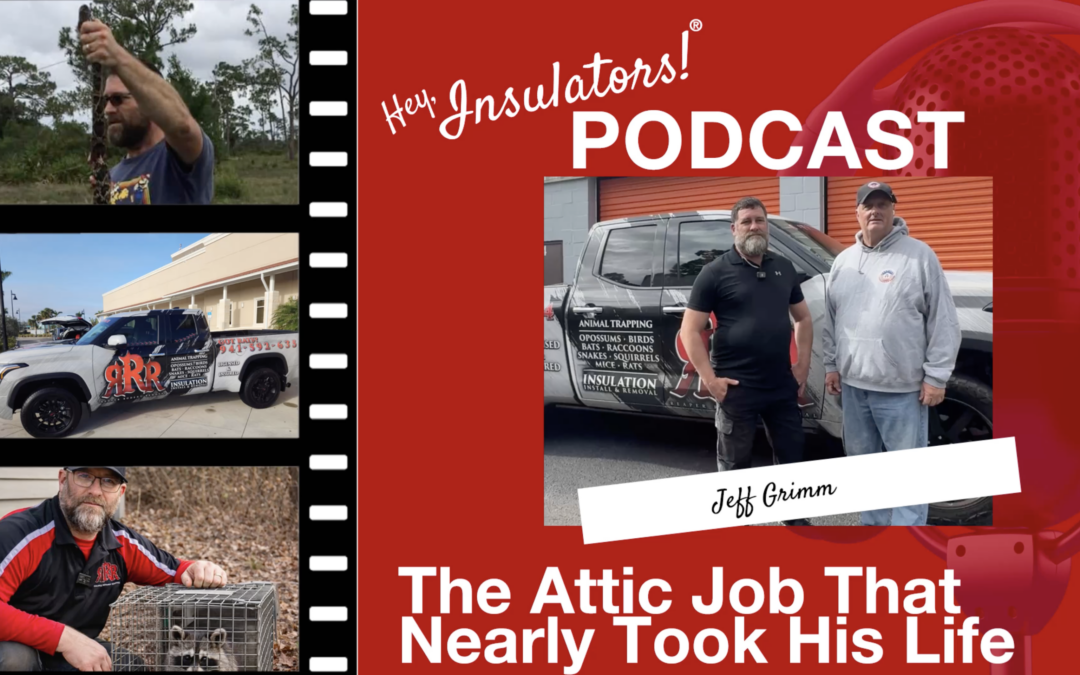
We were on a job site in Florida with Jeff, the owner of Reaper Rodent Removal. With a last name like Grim, “Reaper” fits his wildlife and rodent control company perfectly. Jeff spends his days dealing with raccoons, rats, snakes, and everything else that ends up in Florida attics and crawl spaces.
Over the years, he has seen just about everything: bobcats appearing ten feet away in a dark attic, massive snakes in crawl spaces, and an eastern diamondback rattlesnake that was only a few inches shy of the state record. He has crawled into tight spaces, face‑to‑face with animals that can seriously hurt you.
None of that is what almost killed him.
What nearly took Jeff’s life was something you cannot see: contaminated air in an attic.
The Hidden Danger in “Just a Quick Inspection”
After 20 years in wildlife and pest control, Jeff started to feel indestructible. Like many experienced techs, he would occasionally go into attics for “quick inspections” without a mask. Ten to fifteen minutes, in and out—what could go wrong?
One night he drove down a long driveway to a $10 million home. The attic was in bad shape. He thought about going back to the truck to grab his respirator, but the walk was long and it was late. He decided to push through the inspection without a mask.
That shortcut led to the worst week of his life.
Soon after, Jeff became violently ill. He spent a week in the hospital and about a month in bed. The diagnosis: leptospirosis, a serious infection that can be transmitted through rodent and wildlife urine and feces. Months later he still gets winded easily, battles low stamina, and deals with persistent congestion.
“I’d rather get hit by a truck ten times than go through that again,” he says.
Why Wildlife and Pest Work Makes Attics So Dangerous
Raccoons, rats, and other wildlife are not just a nuisance; they are a health risk in every region of the United States. Their urine and droppings contaminate attic insulation. Over time, that contamination dries out, breaks down, and becomes airborne dust.
The moment you enter an attic—walking, stepping on insulation, moving around—you stir that dust into the air and breathe it in. Along with leptospirosis, technicians can be exposed to hantavirus and other dangerous pathogens associated with rodent and wildlife infestations.
This risk is present whether you’re:
-
Performing a five‑minute inspection
-
Doing a full attic tear‑out and vacuum removal
-
Prepping for new insulation (air sealing, venting)
If the attic has or had wildlife activity, the air can be toxic long before you see visible mold or staining.
Respiratory Protection: Non‑Negotiable on Every Attic Job
Jeff’s experience completely changed the way he approaches personal protection equipment (PPE). For him, the respirator is now non‑negotiable—no matter how short the attic visit.
Some key takeaways from Jeff:
-
Wear a mask for every attic entry: 5 minutes, 15 minutes, or all day, it does not matter.
-
An N95 is better than nothing, but he strongly prefers a P100 respirator with a full vinyl facepiece.
-
In hot climates like Florida, P100s tend to be more durable and stay effective longer for all‑day attic work than disposable N95s.
-
Pair the respirator with gloves and other PPE, but never treat the mask as optional.
Jeff has been in the gym consistently for months, yet still struggles with shortness of breath from a single attic exposure without protection. Twenty years of experience did not protect him—one unmasked inspection changed his health.
The Long Road to Diagnosis
One of the most frightening parts of Jeff’s story is how long it took to get answers.
He first went to the ER, where he was treated for pain and sent home. The next morning, he was back. His primary doctor sent him to a different hospital, where he was finally admitted. It took about four days for the tests to come back confirming leptospirosis.
Many doctors are not familiar with rodent‑borne and wildlife‑related illnesses because they do not see them often. Jeff found himself educating the medical team using case information from other wildlife and attic professionals who had experienced similar infections.
By the time he had a diagnosis, he had already been through days of severe illness and genuinely believed he might not make it. As a former paramedic, he recognized the “look of death” in his own face.
Lasting Effects—Physical and Emotional
Nine to ten months after the infection, Jeff still:
-
Gets winded walking as little as 20 feet
-
Struggles with persistent congestion and a nagging cough
-
Feels the emotional weight of a close call that almost left his wife a widow
This isn’t a scare tactic—it’s the reality many attic and wildlife professionals never hear until it’s too late.
We regularly work with insulators, roofers, HVAC contractors, and wildlife control companies. All of them enter attics and crawl spaces. Many still pop their head up “just to look” without any PPE.
Jeff’s story is a reminder: every attic entry is a respiratory exposure event. Treat it that way.
Attic Air, Wildlife Contamination, and Your Customers
It is not just technicians at risk. Homeowners live under these attics every day. It is estimated that 20–30% of the air a family breathes can originate from the attic, depending on the construction and leakage of the home.
Jeff shared a case from Fresno, California: a customer had raccoon issues and hired someone to repair the roof. The repairs boxed the raccoons into the attic. They died there. The attic was full of carcasses and piles of feces, and the living room below was not well sealed. The family was essentially breathing attic air loaded with contamination.
When you combine wildlife activity, compromised building envelopes, and old or damaged insulation, attic remediation stops being just an energy upgrade—it becomes a health and safety project.
How Professional Attic Vacuum Removal Helps
Jeff’s business shifted heavily into attic clean‑outs after major storms like Hurricane Ian. Wind damage, soffit failures, and roof leaks created perfect conditions for wildlife intrusion, mold, and fungal growth.
With the Cool Machines CoolVac40 insulation removal vacuum and hose system, his team can:
-
Remove contaminated, moldy, or animal‑soiled insulation from the attic
-
Capture debris and spores into sealed collection bags outside the living space
-
Reduce airborne contaminants inside the home compared to manual tear‑out
-
Prepare the attic for repairs, sanitizing, and fresh insulation
On heavily damaged jobs in places like Englewood, the ability to vacuum out batts and blown insulation through a hose saved enormous labor time and significantly reduced respiratory exposure for both crews and occupants.
From Paramedic to Wildlife and Attic Specialist
Jeff didn’t start his career chasing raccoons in attics. He began as a paramedic. After saving a life by breaking protocol and then being disciplined for it, he realized he was making more money part‑time than in his full‑time medic role.
He moved into sales at Terminix and spent seven years there learning the pest and wildlife business from the inside. With about $1,000 and a truck, he eventually launched his own company—Reaper Rodent Removal—and built it into a full‑service wildlife and attic restoration business.
The company has weathered ups and downs, including COVID, but severe storms and hurricanes opened up new demand for soffit repairs, animal exclusion, and full attic remediation. With the right equipment and processes, Jeff turned that demand into several million dollars of work in a single year.
Key Safety Lessons for Wildlife and Attic Professionals
If you handle wildlife removal, pest control, or attic insulation work, Jeff’s experience boils down to a few essential points:
-
Always wear a respirator in attics and contaminated spaces. N95 at minimum; P100 preferred for high‑risk work.
-
Treat every inspection like a job, not a peek. Five minutes is enough time to breathe in something that changes your life.
-
Assume wildlife and rodents have contaminated the space. Droppings and urine do not have to be fresh to be dangerous.
-
Use proper vacuum removal equipment to keep mold, droppings, and debris moving down the hose—not into the home or your lungs.
-
Educate your crews and your customers. Many doctors and homeowners simply do not understand these risks until something goes wrong.
Jeff has faced bobcats, rattlesnakes, and giant constrictors in tight spaces. None of them scared him as much as the infection he got from a dusty attic.
If his story changes the way even one crew gears up before climbing into an attic, it is worth telling.


