

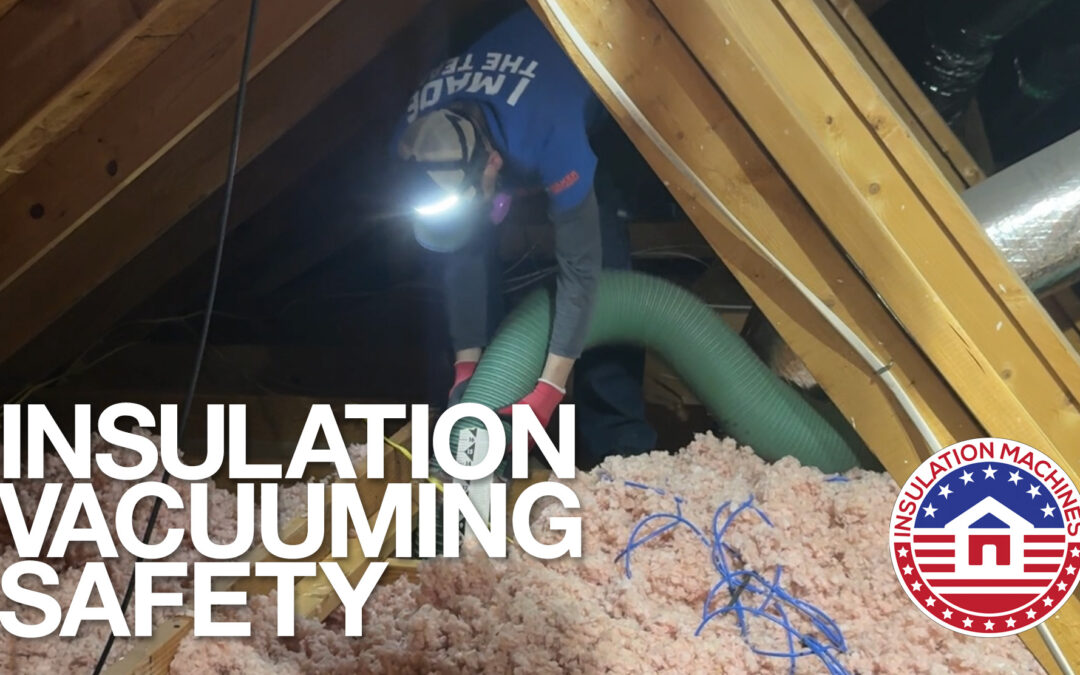
Removing old insulation is one of the most hazardous tasks a contractor faces. Beyond the heat and cramped quarters, crews deal with decades of accumulated dust, rodent waste, and heavy-duty machinery.
Operating an insulation removal vacuum requires more than just high suction; it requires a strict safety protocol to protect your team and your client’s property. Here is the essential safety checklist for every insulation removal project.
1. The Right PPE: Your First Line of Defense
Standard dust masks are insufficient for the particulate matter found in attics. Fiberglass shards and mold spores require specialized respiratory protection.
-
The Gold Standard: Use an N95 or, preferably, a P100 respirator. The P100 filter captures 99.9% of particles, including oil-based aerosols which are common in restoration work. Wildlife feces, when disturbed, aerosol into the air creating a potentially serious health hazard.
-
Eye Protection: Sealed goggles are superior to safety glasses, as they prevent soiled fibers from getting into the eyes.
-
Illumination: Never rely on “work lights” plugged into a wall. Every crew member needs a high-lumen bright headlamp. This keeps both hands free for handling the vacuum hose and navigating ceiling joists.
2. Heat Stress Management: The “Shock” Factor
Attic temperatures can easily exceed 120°F (49°C). How your crew handles the transition from the attic to the ground is critical for their health.
-
Avoid the “Ice Water Shock”: It is a common mistake to chug ice-cold water or jump into a 60°F air-conditioned truck immediately after exiting a hot attic. This extreme temperature shift can cause muscle cramps, dizziness, or even heat stroke.
-
The Better Way: Drink room-temperature or slightly cool water. Take breaks in a shaded, ventilated area to allow the body’s internal thermostat to regulate naturally before entering a high-AC environment.
3. Position Your Vacuum Output Strategically
An insulation removal vacuum is a high-velocity cannon. Even with a collection bag, the exhaust can carry fine grit and debris.
-
Directional Safety: Always position the vacuum output away from homes, parked cars, and expensive landscaping.
-
Property Damage Prevention: Tiny pebbles or nails that pass through the fan blades can become projectiles. Ensure the discharge area is a “clear zone” to avoid costly insurance claims for chipped car paint or broken windows.
4. Refueling and Static Electricity
Insulation vacuums generate massive amounts of static electricity as dry material rubs against the plastic hose at high speeds.
-
The Danger: Static buildup can create a spark. If you attempt to refuel a hot gas-powered vacuum while static is “jumping” around the machine, you risk igniting the gasoline vapors.
-
The Rule: Always shut down the machine and let it sit for a few minutes to dissipate the static charge and cool the engine before opening the fuel cap.
Essential Safety Products for Your Rig
To bridge the gap between “careful operation” and “total safety,” we recommend two critical add-ons for every insulation vacuum system:
The Vacuum Saver
The Vacuum Saver is a heavy-duty inline trap that catches large foreign objects—like bricks, large nails, or pieces of wood—before they hit your high-speed fan blades. This helps prevent “catastrophic failure” to your engine.
The Output Safety Deflector
Even with a Vacuum Saver, small bits of debris can make it through. An Output Safety Deflector acts as a final barrier at the exhaust point. It is designed to kill the velocity of any object that makes it through the fan, ensuring it drops safely into the bag rather than flying out like a bullet.
Summary Checklist for Your Crew:
-
[ ] Respirator (N95/P100) fitted and sealed?
-
[ ] Headlamp batteries charged?
-
[ ] Vacuum output pointed at a clear, “low-value” zone?
-
[ ] Machine grounded and static dissipated before refueling?
-
[ ] Vacuum Saver installed and cleared of debris?
Upgrade Your Safety Kit Today
Protecting your crew is the best way to protect your profits. Accidents lead to downtime and workers’ comp claims.
The Pro-Contractor “Safe Attic” Bundle
Upgrade Your Crew’s Protection & Equipment Longevity
Safety in the attic isn’t just about following rules; it’s about having the right gear to survive the “Big Three” attic hazards: Heat, Dust, and Projectiles. We’ve curated this essential safety bundle to ensure your team stays healthy and your equipment stays profitable.
1. The Respiratory Defense Kit (P100 Protection)
Don’t settle for basic masks. This bundle features professional-grade P100 respirators that filter out 99.9% of fiberglass particles, mold spores, and rodent dander.
-
Why it’s in the bundle: P100 filters are oil-resistant and catch the microscopic fibers that N95s can miss during heavy removal.
2. High-Lumen Wide-Beam Headlamps
Navigating joists in a dark attic is a leading cause of “foot-through-the-ceiling” accidents. This bundle includes high-lumen LED headlamps with a wide-angle beam to illuminate your entire field of vision, not just a small spot.
3. The Vacuum Saver & Output Safety Shield
Protect your machine and your job site. This bundle includes links to our heavy-duty Vacuum Saver (to catch bricks and metal before they hit the fan) and the Output Deflector to ensure no shrapnel ever leaves your exhaust hose.
4. Heat Stress Mitigation Gear
To prevent the “temperature shock” mentioned in our safety guide, this kit includes insulated hydration vessels designed to keep water cool (not ice-cold) to help maintain a safe core body temperature during breaks.
Get the Full Safety Bundle on Amazon
Ready to gear up? We have pre-selected the highest-rated, contractor-tested safety items to save you time and keep your crew compliant.
https://kit.co/InsulationMachines/insulation-vacuum-safety-items


