


This was my third on-site training trip to the Sioux Falls, South Dakota area. We were with other companies doing wall spray (always in the winter) LOL!! This time, we did a “net and blow” with fiberglass. This technique is also referred to as “Blown in Batts,” (BIBS) but since that is a patent held by Johns Manville, it would not be proper to call this BIBS or to even sell it as such.
Now, with all of that legalease out of the way, let’s talk about the proper way to prepare the site and blow fiberglass into netting.
Preparing the Site
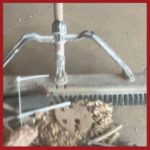
We highly encourage the practice of leaving a worksite in better condition than you arrived. Builders and homeowners expect their projects to be clean. Before we began to work, we covered the duct openings with pieces of drywall to prevent debris/fiberglass from getting into the new duct work. We left those in place since other trades (drywall, mudders, painters, trim guys, electricians and plumbers) will follow. Then we swept the house. You want to sweep at least the perimeters of the rooms so you can scoop up and recycle material that gathers on the floor.
Hanging the Fabric
At first, hanging fabric can be a slow process for the beginner. Here is quick run-down of how to make fast, accurate work of it.
-
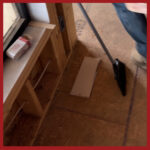
- Cover all duct openings. Leave in place for other trades that follow.
-
- Sweep perimeter of rooms (or just sweep up everything).
-

- Cut fabric roughly to size for each wall. Leave about 6 inches on each end to give plenty of material for stapling.
-
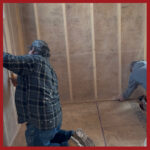
- You can either hand staple or use an automatic stapler. An automatic stapler will go much faster and embed the staples better.
-
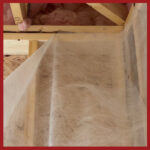
- When starting to put fabric on a wall, start in an upper corner.
-

- CAREFUL: Don’t cover the topmost top plate. You will short yourself on the bottom and make stapling very difficult.
-
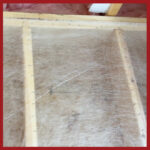
- Staple fabric to the lowest top plate. You are filling only the cavity.
-

- After securing the corner, staple the top, keeping material taut.
-

- After securing the top, stretch the fabric in the middle and put a string of staples in place.
-

- When filling cavities above and below windows, staple the perimeter outside the cavity.
-

- Pull the rest of the fabric out toward the edges and staple the remaining fabric in place.
-

- Make sure you set the right PSI. With a Cool Machine, it is easy to do with the embedded gauge.
-

- It helps to use a smaller diameter hose for above windows, doors and other smaller openings.


